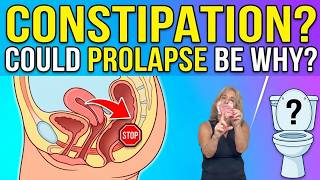
What This Video Covers
This short video explains the anatomy behind tight pelvic floor constipation. Sheree focuses on the external anal sphincter, its three layers, the perineal body, the sacrum, and the puborectalis or rectopubalis muscle.
Key takeaway: A tight pelvic floor can restrict the sphincter and pelvic angle needed for stool to pass freely.
Three Layers of the External Sphincter
Sheree explains that the external anal sphincter has three layers that attach to different areas of the pelvic region. The outer layer connects to the perineal body, so tight pelvic floor muscles there can make that sphincter layer too tight.
The next layer connects with the sacral region. If the sacrum does not move well, the sphincter may also have difficulty moving and relaxing well.
Why Sacral Motion Matters
The transcript connects constipation to the ability to move through anterior and posterior pelvic tilt. If the sacrum is restricted, the sphincter may not relax fully enough for a good bowel release.
This makes constipation a pelvic girdle issue, not just an anal sphincter issue. The pelvis, sacrum, and muscles around the rectal pouch all influence the emptying angle.
The Puborectalis Angle
Sheree describes the deeper layer attaching to the puborectalis or rectopubalis muscle. If that muscle is too rigid, the pelvis may not drop forward into the anterior tilt needed for the rectal pouch to empty freely.
That is the reason a tight pelvic floor can cause constipation: the muscles and bony motion that should create an open path stay restricted.
What to Watch For
Transcript-informed checkpoints
- Outer sphincter layer connects to the perineal body
- Another layer is influenced by sacral motion
- The puborectalis helps create the bowel emptying angle
- Anterior pelvic tilt can matter for rectal pouch emptying
- Tight pelvic girdle muscles can block full release
Get the Pelvic Wellness Starter Course
Follow along with the full 1+ hour class and build a structured pelvic health routine
How to Use This Guidance Safely
This page summarizes the video for education and search visibility. It should not replace a diagnosis, prescription, or individualized pelvic floor physical therapy plan.
When to Get Help
Do not ignore constipation that is severe, painful, new, or associated with bleeding or unexplained symptoms.
Frequently Asked Questions
Can a tight pelvic floor cause constipation?
Yes. Sheree explains that tight pelvic floor muscles can restrict the anal sphincter, sacrum, and puborectalis mechanics needed for emptying.
Why does the sacrum matter?
One sphincter layer relates to the sacral region, so poor sacral movement can limit sphincter relaxation.
What is the puborectalis role?
The puborectalis helps maintain or release the angle of the rectal pouch. If it is too tight, stool may not empty freely.
Is this just a muscle problem?
It can involve muscles, sphincters, pelvic tilt, sacral motion, and nervous system coordination.

Sheree DiBiase
Sheree DiBiase has been a physical therapist for over 40 years, with specialized expertise in pelvic floor rehabilitation, pelvic health education, and whole-person recovery. She is the founder of Lake City Physical Therapy and the creator of the Pelvic Floor Pro app.