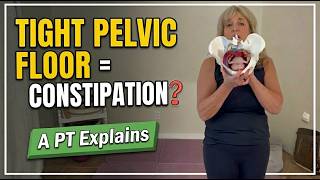
What This Video Covers
In this video, Sheree explains why pelvic organ prolapse can make constipation more complicated. She focuses on the rectal pouch, how it can tilt toward the vaginal vault, and how that change may interfere with the clean signal between the internal and external sphincters.
Key takeaway: A prolapsed rectal pouch can change the angle and communication pattern needed for emptying, especially when the surrounding muscles are also tight.
How Prolapse Changes the Angle
Sheree uses a pelvic model to show the rectal pouch, vaginal wall, urethral area, bladder, uterus, fallopian tubes, and ovaries. In a posterior prolapse, the rectal pouch can fall or tilt forward toward the vaginal vault.
That forward tilt may change the angle stool needs to travel through. Instead of a clean path, the rectal pouch and sphincters may not communicate as efficiently.
Why Muscle Tightness Can Add to the Problem
The transcript describes a deeper bowel muscle that wraps around the rectal area. If that muscle is too tight while the rectal pouch is falling forward, Sheree says it can feel like everything backs up.
This is why prolapse-related constipation is rarely just a fiber issue. Hydration and fiber matter, but positioning, sphincter relaxation, pelvic floor strength, and muscle pliability also matter.
Splinting, Scheduling, and Sphincter Training
Sheree mentions that some people use splinting by supporting the vaginal wall or using a tool to help the rectal pouch line up better during emptying. That should be discussed with a pelvic health professional.
She also talks about scheduling bowel movements after a hot drink or breakfast, and training the external anal sphincter so it can contract quickly, relax fully, and sustain a hold for 30 to 60 seconds.
What to Watch For
Transcript-informed checkpoints
- Rectal pouch prolapse can tilt toward the vaginal vault
- The internal sphincter still has to sense what is in the pouch
- A tight wrapping muscle can make the outlet angle harder
- Splinting may help some people but should be guided
- Hydration, fiber, positioning, and sphincter control all matter
Get the Pelvic Wellness Starter Course
Follow along with the full 1+ hour class and build a structured pelvic health routine
How to Use This Guidance Safely
This page summarizes the video for education and search visibility. It should not replace a diagnosis, prescription, or individualized pelvic floor physical therapy plan.
When to Get Help
Bowel symptoms with prolapse should be assessed by a qualified healthcare provider, especially if symptoms are new, worsening, painful, or associated with bleeding.
Frequently Asked Questions
Can prolapse cause constipation?
Yes. Sheree explains that rectal pouch prolapse can change the angle and signaling pattern needed for easy emptying.
What is splinting?
Splinting means supporting the vaginal wall or rectal pouch area to improve the angle for stool passage. It should be discussed with a pelvic health provider.
Is fiber enough for prolapse constipation?
Not always. Fiber and hydration help stool consistency, but prolapse can also require positional strategies, muscle relaxation, and sphincter training.
What sphincter skills matter?
Sheree highlights quick contraction, full relaxation, and a sustained 30 to 60 second hold as part of resetting bowel reflex communication.

Sheree DiBiase
Sheree DiBiase has been a physical therapist for over 40 years, with specialized expertise in pelvic floor rehabilitation, pelvic health education, and whole-person recovery. She is the founder of Lake City Physical Therapy and the creator of the Pelvic Floor Pro app.