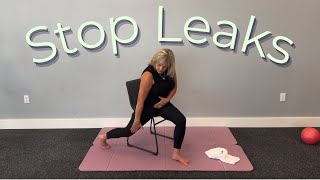
The Link Between Pelvic Floor Weakness and Urinary Incontinence
It is one of the most common questions women ask their pelvic floor physical therapist: does a weak pelvic floor cause incontinence? The short answer is yes, it is very possible. But the full picture is more nuanced than a simple cause-and-effect relationship.
Your pelvic floor muscles are skeletal muscles, just like your biceps or quadriceps. They can be trained, they can weaken, and they respond to the same principles of exercise physiology. These muscles serve a critical role: they support the bladder from below, wrap around the urethra to maintain closure, and coordinate with the rest of your core to manage changes in abdominal pressure.
When these muscles weaken, the support system underneath your bladder begins to fail. The urethra cannot maintain its seal during moments of increased pressure — a cough, a sneeze, a jump — and leakage occurs. This is the hallmark of stress urinary incontinence, the most prevalent form of incontinence in women.
Key insight from the video: Your pelvic floor contains both fast-twitch muscle fibers (for quick closure during a cough or sneeze) and slow-twitch fibers (for sustained support around the bladder neck and urethra). Weakness in either fiber type can contribute to incontinence in different ways.
A 2018 Cochrane systematic review of 31 trials involving 1,817 women found that pelvic floor muscle training was effective for stress urinary incontinence, with trained women being eight times more likely to report cure compared to controls. (Dumoulin C, Cacciari LP, Hay-Smith EJC. Cochrane Database Syst Rev. 2018;10:CD005187)
Why Weakness Alone Does Not Always Mean Leakage
Here is what many women find surprising: pelvic floor weakness does not automatically lead to incontinence. As Sheree explains in the video, many of her patients have had mild pelvic floor weakness for years without ever experiencing a single leak. Their bodies compensate. Other muscles in the core pick up the slack. The system holds together — until something disrupts it.
That disruption can come from many directions:
- A back injury that changes how the deep core muscles activate
- A hip injury or adductor strain that alters the pelvic floor's coordination pattern
- Hormonal changes during perimenopause that reduce tissue elasticity and muscle tone
- A period of inactivity or deconditioning that weakens the surrounding support muscles
- Aging that gradually reduces muscle mass and neuromuscular control
This is what clinicians call the "overflow pattern." The pelvic floor was already vulnerable, but it took an additional stressor to push it past its threshold. The weakness was there; the incontinence was not — until something else tipped the scales.
A study published in Neurourology and Urodynamics found that 78% of women with chronic low back pain also had measurable pelvic floor dysfunction, supporting the clinical observation that injuries elsewhere in the core directly impact pelvic floor function. (Arab AM, Behbahani RB, Lorestani L, Azari A. Neurourol Urodyn. 2010;29(5):771-5)
The Core Works as a Team
Your pelvic floor does not work in isolation. It functions as part of an integrated pressure-management system alongside the diaphragm, transverse abdominis, and multifidus muscles. When one part of this system fails, the others are affected.
Consider what happens when you injure your back: the deep stabilizing muscles around the spine stop firing efficiently. Your body shifts to a guarded movement pattern. The transverse abdominis — the deepest abdominal muscle that works in direct partnership with the pelvic floor — becomes inhibited. And because the pelvic floor co-activates with the transverse abdominis, it too begins to function less effectively.
This is why women sometimes develop incontinence after an injury that seems completely unrelated to the bladder. The connection runs through the core.
Hodges and colleagues demonstrated that the pelvic floor muscles contract automatically in coordination with the transverse abdominis during trunk movements, confirming that these muscles function as a unit. Disruption to one component affects the entire system. (Hodges PW, Sapsford R, Pengel LHM. J Electromyogr Kinesiol. 2007;17(5):556-567)
Pregnancy and Postpartum: A Critical Window
Pregnancy and childbirth represent one of the most significant challenges to pelvic floor integrity. During vaginal delivery, the pelvic floor muscles can stretch up to three times their resting length. Nerves may be compressed or stretched. Connective tissue can be damaged. Even in the absence of visible tearing, the muscles may be significantly weakened.
Many women notice that things feel different after delivery — they cannot squeeze and hold the way they could before, or they feel a heaviness in the pelvis — but they may not develop incontinence right away. The weakness is present, but the body compensates. Then, years later, another stressor arrives: a return to high-impact exercise, hormonal changes, a second pregnancy. And suddenly, the incontinence that was waiting in the background shows up.
A landmark longitudinal study in BJOG followed 6,981 women and found that those who had pelvic floor weakness at three months postpartum were significantly more likely to develop urinary incontinence 6 and 12 years later. (MacArthur C, Wilson D, Herbison P, et al. BJOG. 2006;113(2):218-27)
Why Early Intervention Matters
- Pelvic floor weakness after childbirth does not always resolve on its own — targeted exercise is needed
- Women who begin pelvic floor training in the early postpartum period have a 50% lower risk of developing incontinence
- Addressing weakness before symptoms appear is far more effective than treating established incontinence
- The same principle applies at perimenopause: building strength before hormonal changes accelerate tissue changes is protective
Get the Complete SUI Class
8 expert-led video sessions covering the science of incontinence, exercises, core training & sport return
What the Research Says: Pelvic Floor Training Works
The clinical evidence for pelvic floor muscle training as a treatment for urinary incontinence is overwhelming. It is recommended as the first-line treatment by every major urology and physiotherapy guideline in the world.
Here is what the research shows:
- Cure rates of 56-70% for stress urinary incontinence with supervised pelvic floor muscle training (Dumoulin et al., Cochrane Review, 2018)
- Significant reduction in leakage episodes — women performing pelvic floor exercises experienced a 68% greater reduction in daily leakage episodes compared to controls (Bo K, Herbert RD. Neurourol Urodyn. 2013;32(3):215-23)
- Improvements in quality of life comparable to surgical outcomes for mild to moderate stress incontinence (Labrie J, et al. BMJ. 2013;346:f1399)
- Both fast-twitch and slow-twitch fibers can be specifically trained, with programs targeting both fiber types showing superior outcomes (Hay-Smith EJC, et al. Cochrane Database Syst Rev. 2011;CD001407)
The key takeaway is this: if you know your pelvic floor is weak, you have the power to change that. The muscles respond to training. The evidence is clear. And addressing weakness now — before incontinence develops or worsens — is far easier than treating established symptoms.
When to Seek Professional Help
If you have been doing pelvic floor exercises for 6-8 weeks without improvement, if you experience pain during contractions, or if you are unsure whether you are engaging the correct muscles, see a pelvic floor physical therapist. Up to 30% of women perform Kegels incorrectly without professional guidance (Bo K, Sherburn M. Acta Obstet Gynecol Scand. 2005;84(6):544-9). A qualified therapist can assess your specific pattern of weakness and create a targeted program.
Signs Your Pelvic Floor May Be Weak
Not sure whether pelvic floor weakness is contributing to your symptoms? Here are the most common signs to watch for:
- Leaking urine when you cough, sneeze, laugh, or exercise
- A feeling of heaviness or pressure in the pelvis, especially at the end of the day
- Difficulty stopping urine flow midstream (though this is a test, not an exercise)
- Needing to rush to the bathroom urgently and not always making it in time
- Reduced sensation during intimacy
- Difficulty engaging or feeling the pelvic floor muscles when you try to squeeze and lift
If you recognize several of these signs, pelvic floor weakness is very likely playing a role. The good news: these muscles respond well to targeted training, especially when you address both the fast-twitch fibers (for quick closure) and the slow-twitch fibers (for sustained support) as Sheree teaches in the SUI class.
Frequently Asked Questions
Does a weak pelvic floor always cause incontinence?
No, a weak pelvic floor does not automatically cause incontinence. Many women have some degree of pelvic floor weakness without experiencing leakage. However, weakness creates vulnerability — when combined with another trigger like a back injury, hip injury, aging, or increased physical demands, incontinence can develop. Addressing weakness early reduces the risk significantly.
Can a back injury cause pelvic floor weakness and incontinence?
Yes. A back injury can alter how your pelvic floor muscles function because the core muscles work as a coordinated unit. When the back is injured, the pelvic floor muscles may change their activation patterns and weaken as a result. Research shows that up to 78% of women with chronic low back pain also have pelvic floor dysfunction. This is why some women develop incontinence after a back injury even if they never had bladder problems before.
How do I know if my pelvic floor is weak?
Common signs of pelvic floor weakness include difficulty holding urine when coughing, sneezing, or laughing; a feeling of heaviness or pressure in the pelvis; difficulty fully emptying the bladder; reduced sensation during intimacy; and difficulty engaging or 'lifting' the pelvic floor when trying. A pelvic floor physical therapist can perform a clinical assessment to accurately evaluate your muscle strength, endurance, and coordination.
Should I strengthen my pelvic floor after childbirth even if I don't have incontinence?
Absolutely. After childbirth, the pelvic floor muscles have been stretched and may be weakened even if you are not currently experiencing leakage. Research published in the British Journal of Sports Medicine found that postnatal pelvic floor training reduced the risk of developing incontinence by 50% up to six months postpartum. Addressing weakness early prevents problems from developing later when additional stressors arise.
How long does it take to strengthen a weak pelvic floor?
Most women begin to notice improvements in pelvic floor strength within 4 to 6 weeks of consistent exercise. However, meaningful changes in incontinence symptoms typically take 3 to 6 months. Like any skeletal muscle, pelvic floor muscles respond to progressive overload and need time to build both strength and endurance. Consistency matters more than intensity.

Sheree DiBiase
Sheree DiBiase has been a physical therapist for over 40 years, specializing in pelvic floor rehabilitation. She is the founder of Lake City Physical Therapy and the creator of the Pelvic Floor Pro app. Sheree is a board-certified Pelvic Rehabilitation Practitioner (PRPC) and has helped thousands of women overcome urinary incontinence and regain confidence in their daily lives.