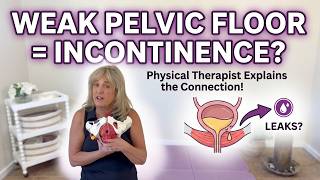
Yes — Pelvic Floor Exercises Are the Most Effective Treatment for Incontinence
If you are dealing with bladder leakage and wondering whether pelvic floor exercises can actually help, the answer is an unequivocal yes. Pelvic floor muscle training is not just helpful — it is the recommended first-line treatment for urinary incontinence by every major medical and physiotherapy guideline worldwide, including the International Continence Society and the American Urological Association.
The reason is straightforward: your pelvic floor muscles are skeletal muscles, just like the muscles in your arms and legs. They respond to training. They can be strengthened. And when they are strong, coordinated, and working with the rest of your core, they provide the closure and support your bladder needs to stay continent.
What the evidence says: A 2018 Cochrane systematic review analyzing 31 randomized controlled trials found that women who performed pelvic floor muscle training were eight times more likely to report cure of stress urinary incontinence compared to women who received no treatment. This is one of the strongest evidence bases for any conservative treatment in medicine.
Dumoulin C, Cacciari LP, Hay-Smith EJC. Pelvic floor muscle training versus no treatment, or inactive control treatments, for urinary incontinence in women. Cochrane Database of Systematic Reviews. 2018;10:CD005187. Women in the PFMT groups were 8x more likely to report cure and 17x more likely to report cure or improvement.
Understanding Your Pelvic Floor: Two Types of Muscle Fibers
As Sheree explains in the video, the pelvic floor contains two distinct types of muscle fibers, and both play a role in bladder control:
- Fast-twitch fibers — These contract quickly and are responsible for rapid closure of the urethral and anal sphincters. They fire when you cough, sneeze, jump, or need to urgently hold urine. When fast-twitch fibers are weak, you experience the classic stress incontinence leak during sudden pressure changes.
- Slow-twitch fibers — These provide sustained, endurance-based contractions that cradle the bladder, support the organs, and maintain resting tone throughout the day. When slow-twitch fibers are weak, you may notice a gradual worsening of symptoms over the course of the day or difficulty maintaining closure during prolonged standing or walking.
Effective pelvic floor training must address both fiber types. Quick, sharp contractions train the fast-twitch fibers. Longer sustained holds build slow-twitch endurance. A program that only focuses on one type will leave gaps in your support system.
Hay-Smith EJC, Herderschee R, Dumoulin C, Herbison GP. Comparisons of approaches to pelvic floor muscle training for urinary incontinence in women. Cochrane Database Syst Rev. 2011;CD009508. Programs combining both fast and slow contraction training showed superior outcomes compared to single-approach protocols.
The Problem of Pelvic Floor Asymmetry
One of the most important concepts Sheree discusses in this video is something many women do not realize: your pelvic floor is not uniformly strong or weak. It has a front portion (surrounding the urethra and vaginal opening) and a rear portion (around the anus), and these areas can behave very differently.
After childbirth, a common pattern emerges:
- The front of the pelvic floor becomes weaker due to stretching during delivery. It loses its ability to contract efficiently and provide the closure pressure the urethra needs.
- The rear of the pelvic floor often becomes tight and stiff — a compensatory response as those muscles try to make up for the lost support in the front.
This asymmetry explains why simply doing standard Kegel contractions may not be enough. If part of the floor is already too tight, blindly contracting everything can make the imbalance worse. Instead, you need a targeted approach: release the tight areas first, then strengthen the weak areas in elongated positions.
How to Address Pelvic Floor Asymmetry
- For tight rear muscles: Use positions that open the back of the floor (such as a wide stance with knees slightly turned in), then practice anal sphincter contractions in that lengthened position
- For weak front muscles: Practice "stop the flow" contractions in elongated positions so the muscles learn to fire through their full range of motion
- Key principle: Contracting a muscle when it is on stretch teaches it to work at the length where it is weakest — this is where real functional gains happen
Morin M, Bourbonnais D, Gravel D, Dumoulin C, Lemieux MC. Pelvic floor muscle function in continent and stress urinary incontinent women using dynamometric measurements. Neurourol Urodyn. 2004;23(7):668-674. This study demonstrated that women with SUI had significantly reduced pelvic floor muscle strength and endurance compared to continent women, with measurable asymmetry in contraction patterns.
Scar Tissue and Tearing: Why It Still Matters Years Later
Sheree shares a telling clinical example in the video: a patient with deep adductor (inner thigh) pain that seemed unrelated to her pelvic floor. On examination, the cause was clear — scar tissue from a previous perineal tear during childbirth.
Here is what was happening: The scar tissue on one side of her pelvic floor had healed shorter and tighter than the surrounding tissue. Because the fascial connections of the large adductor muscles run directly through the pelvic floor, this tightened scar tissue was pulling on her adductor. The result was pain in her inner thigh that no amount of adductor stretching could fix.
While this patient did not yet have incontinence, the pattern was a warning sign. Scar tissue that restricts pelvic floor mobility will eventually compromise the muscles' ability to contract and support the bladder effectively. If left unaddressed, incontinence often develops when additional stressors arrive.
The solution: practice pelvic floor contractions in elongated positions so the scarred tissue learns to work through stretch. This builds both mobility and strength simultaneously, restoring the floor's ability to function across its full range of motion.
Beckmann MM, Stock OM. Antenatal perineal massage for reducing perineal trauma. Cochrane Database Syst Rev. 2013;4:CD005123. While focused on prevention, this review confirmed that tissue mobility in the perineum is a critical factor in pelvic floor function, and that restricted tissue (including scar tissue) adversely affects muscle performance.
Get the Complete SUI Class
8 expert-led video sessions covering fast-twitch & slow-twitch training, core coordination & sport return
The Core Connection: Air Pressure Management
One concept Sheree emphasizes is that pelvic floor exercises work best when combined with the rest of the core. The pelvic floor does not function in isolation — it is one part of a four-component pressure management system:
- The pelvic floor — the base of the pressure canister
- The diaphragm — the top of the canister, managing breathing pressure
- The transverse abdominis — the deepest abdominal muscle, wrapping like a corset
- The multifidus — the deep back extensors stabilizing the spine
When these four components work together, they manage intra-abdominal pressure efficiently. When you cough, the diaphragm drops, pressure increases in the abdomen, and the pelvic floor must reflexively tighten to maintain closure at the urethra. If the core system is not coordinated, pressure overwhelms the pelvic floor and leakage occurs.
This is why isolated Kegel exercises — while better than nothing — are less effective than integrated core-pelvic floor training. When you get your power to your core and your floor together, as Sheree puts it, incontinence will literally go away.
Hodges PW, Sapsford R, Pengel LHM. Postural and respiratory functions of the pelvic floor muscles. J Electromyogr Kinesiol. 2007;17(5):556-567. This landmark study confirmed that the pelvic floor muscles contract automatically in coordination with the transverse abdominis and diaphragm during postural tasks, demonstrating the integrated nature of the core pressure system.
Bo K, Herbert RD. There is not yet strong evidence that exercise regimens other than pelvic floor muscle training can reduce stress urinary incontinence in women: a systematic review. J Physiother. 2013;59(3):159-168. While PFMT is the gold standard, programs that integrate core coordination with PF training show the best long-term outcomes for incontinence reduction.
How Quickly Can You Expect Results?
One of the most encouraging aspects of pelvic floor training for incontinence is that results can come relatively quickly:
- 2-4 weeks: Many women notice improved awareness and ability to activate the pelvic floor muscles
- 4-6 weeks: Measurable increases in muscle strength begin to appear, and some women report fewer leakage episodes
- 3-6 months: Significant reduction or complete resolution of incontinence symptoms for the majority of women who train consistently
- Long term: Maintaining a regular practice (even 2-3 times per week) preserves gains and prevents recurrence
The key factor is consistency. Like any muscle-training program, the pelvic floor needs progressive overload and regular stimulus to adapt. Women who follow a structured, supervised program see significantly better results than those who attempt exercises on their own without guidance.
Labrie J, Berghmans BL, Fischer K, et al. Surgery versus physiotherapy for stress urinary incontinence. N Engl J Med. 2013;369:1124-1133. At 12 months, pelvic floor physiotherapy produced outcomes comparable to surgery for moderate stress incontinence, with 49% of women in the physiotherapy group reporting subjective cure or improvement.
Important: Quality Matters as Much as Quantity
Research shows that up to 30% of women perform pelvic floor contractions incorrectly when self-taught, sometimes bearing down instead of lifting — which can worsen incontinence. If you are unsure whether you are engaging the correct muscles, or if you have not seen improvement after 6-8 weeks of consistent practice, a pelvic floor physical therapist can assess your technique and create a targeted program. (Bo K, Sherburn M. Acta Obstet Gynecol Scand. 2005;84(6):544-9)
Frequently Asked Questions
Can pelvic floor exercises cure incontinence completely?
Yes, for many women pelvic floor exercises can eliminate incontinence entirely. A 2018 Cochrane review found that 56-74% of women with stress urinary incontinence experienced cure or significant improvement with supervised pelvic floor muscle training. Results depend on the severity of incontinence, consistency of practice, and whether the exercises are performed correctly with proper core coordination.
Should I do pelvic floor exercises if my muscles are too tight?
Yes, but you need to modify your approach. If parts of your pelvic floor are too tight, you should first work on releasing that tension through elongated positions before contracting. As explained in the video, many women have asymmetry — the back of the pelvic floor may be tight while the front is weak, especially after childbirth. The key is to open the tight areas first, then contract in lengthened positions so the muscles learn to work through their full range of motion.
Can I do pelvic floor exercises after perineal tearing from childbirth?
Yes, pelvic floor exercises are important after perineal tearing, but technique matters. Scar tissue from tearing can shorten and tighten the muscles, creating imbalances that pull on surrounding structures like the adductors. You should practice contractions in elongated positions to help the scarred tissue regain mobility. This allows the pelvic floor to contract properly even where the tissue has healed shorter and tighter.
What is the connection between the pelvic floor and the core?
The pelvic floor is part of an integrated core system that includes the deep abdominal muscles (transverse abdominis), back extensors (multifidus), and the diaphragm. These muscles work together to manage air pressure inside the abdomen. When all four components coordinate properly, they provide the support needed to prevent incontinence during daily activities, exercise, and moments of increased abdominal pressure like coughing or lifting.
Why does my pelvic floor have both tight and weak areas?
Pelvic floor asymmetry is very common, especially after childbirth. The front of the pelvic floor (around the urethra and vaginal opening) often becomes weaker due to stretching during delivery, while the back of the floor (around the anus) can become tight and stiff as a compensatory response. Scar tissue from tearing also contributes to areas of tightness. This is why a blanket approach of just doing Kegels may not be enough — you need to address both the tight and weak areas with different strategies.

Sheree DiBiase
Sheree DiBiase has been a physical therapist for over 40 years, specializing in pelvic floor rehabilitation. She is the founder of Lake City Physical Therapy and the creator of the Pelvic Floor Pro app. Sheree is a board-certified Pelvic Rehabilitation Practitioner (PRPC) and has helped thousands of women overcome urinary incontinence and regain confidence in their daily lives.